Questions
Everything people ask us before, during and after a pour. If yours isn't here, WhatsApp us.
Choosing
What's the difference between metallic, flake and quartz floors?
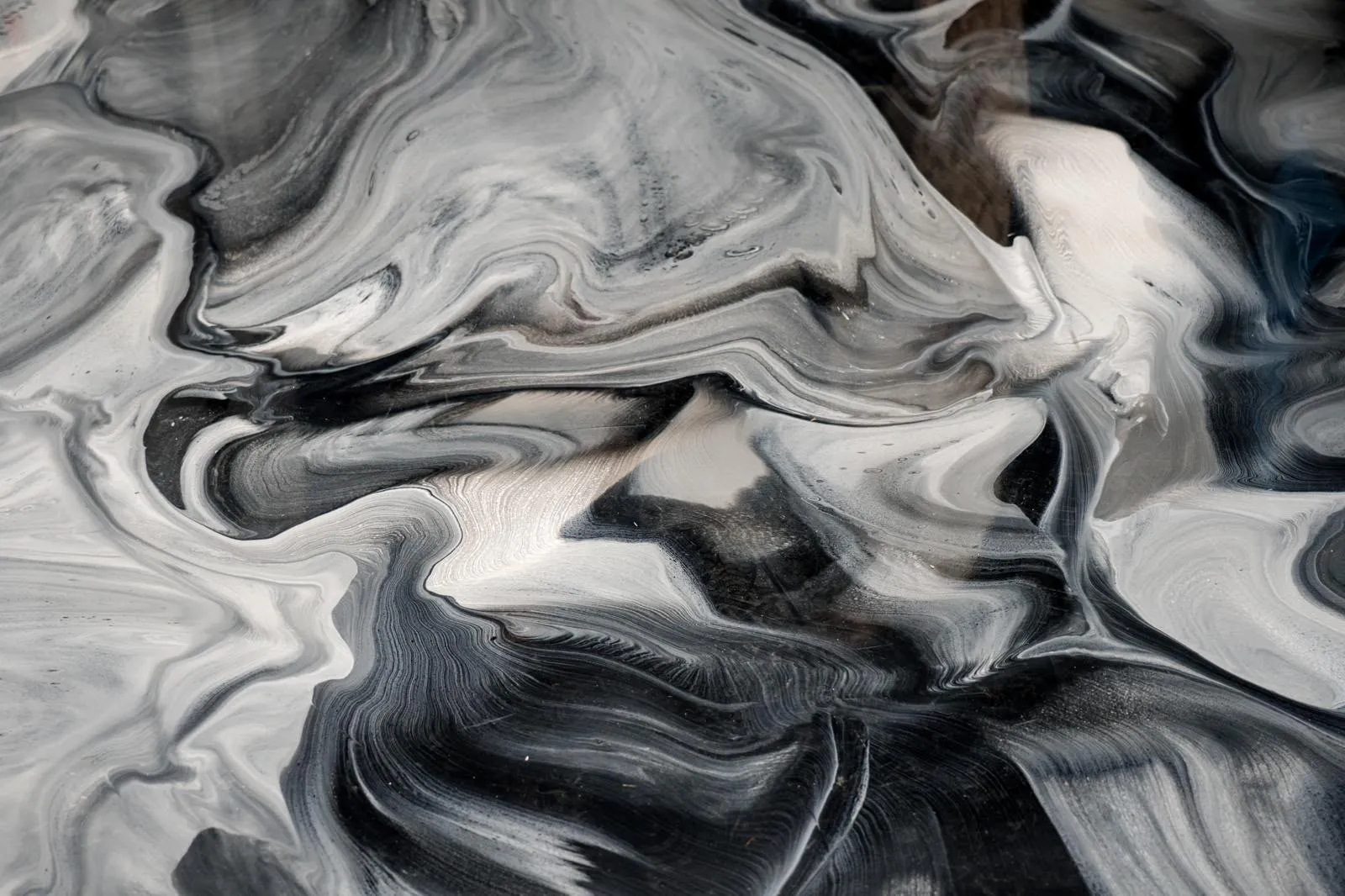
They share the same foundation (prep, primer, epoxy) but finish differently. Metallic floors are poured and hand-worked into a marble-like design with a deep gloss; they're the showpiece. Flake floors have decorative vinyl chips broadcast into the resin, giving texture and hiding dust; they're the practical choice for garages and utility spaces. Quartz floors bind coloured quartz aggregate in clear resin for maximum durability and slip resistance in commercial kitchens, showers and heavy-traffic areas.
Is an epoxy floor right for a house, or just garages?
Homes are a big part of what we do: kitchens, living rooms, hallways, conservatories, bathrooms and basements. Resin is seamless, easy to clean and genuinely unique. It's a hard floor, though, so if you want softness underfoot, plan for rugs (once it's fully cured).
Can I have any colour I like?
Pretty much. If you can dream it, we can pour it. Our eight house colourways are starting points. You can tweak them in the Colour Lab or bring us a photo, a fabric or a paint chip and we'll design around it. We'll show samples before the pour.
Will my floor look exactly like the one in your photos?
Same colourway and style, never an exact copy. Metallic resin moves as it's worked and as it levels. We agree the colours, how busy the veining is and the overall feel, and we control the pour, but the last few percent is the material's own. That's why nobody else will have your floor.
Gloss, satin or matt?
Gloss gives the deepest, most liquid look and makes metallics come alive. Satin and matt soften reflections, show fewer fine scratches and dust, and feel calmer in big living spaces. Gloss can be slippery when wet; anti-slip additives can go in any finish.
Cost & quotes
How much does an epoxy floor cost?
It depends on the job, so we don't publish a price list that would be wrong for most floors. The main drivers are area (m²), the condition of the substrate and how much prep and repair it needs, the system (metallic, flake or quartz, and which topcoat), design complexity, and access and logistics. After a survey you get a fixed written quote, not a vague day rate. Our cost guide explains each factor in detail.
Why is the survey important?
Because we can't price prep we haven't seen. Moisture in the slab, old paint, loose tiles or big cracks all change what the floor needs. A survey means the quote is accurate and there are no nasty surprises halfway through.
Why are some quotes much cheaper than others?
Usually because something's been left out: diamond grinding replaced with a quick acid etch or none at all, no moisture testing, a thin roll-on coat instead of a 2–3 mm body coat, or no proper topcoat. Ask every installer for the full system build-up, layer by layer, and compare like for like.
Is a small area cheaper per square metre?
Usually the opposite. Setup, mixing, travel and prep equipment cost roughly the same whether the floor is 10 m² or 40 m², so smaller rooms tend to cost more per square metre. Combining areas (a hallway with a kitchen, say) can make better use of a visit.
The job
How long does it take?
A typical room or garage is usually 3–5 working days on site: prep and priming, the pour, then the topcoat, each with cure time in between. Then the floor needs a few more days before furniture or cars go back. Bigger or more complex floors take longer. We'll give you a schedule with dates.
Can you lay epoxy over tiles?
Often, yes, if the tiles are well bonded and the floor beneath them is sound. We test for loose or hollow tiles, abrade the surface, fill the grout lines and level it before the resin goes down. Our Champagne Pearl conservatory was done exactly that way. Loose, cracked or flexing tiles have to come up first.
Does it smell? Is it safe?
There's a noticeable smell during application and for a day or so afterwards, mainly from primers and some topcoats. We ventilate during the work and recommend keeping children and pets out of the area until it's cured. Once fully cured the floor is inert and doesn't keep off-gassing. If anyone in the house has respiratory sensitivities, tell us and we can talk about low-odour options and timing.
Do I need to move out?
Not usually. You'll lose the use of the room being done (and any access through it) for a few days. If the floor is your only route through the house, we'll plan the order of work around it.
What about damp or moisture in the floor?
Moisture is the biggest cause of resin floor failures: bubbles, blistering and delamination. We test before quoting. Where readings are high, options include a moisture-tolerant primer, a damp-proof membrane system, or simply waiting for a new screed to dry. New screeds and slabs need proper drying time before any resin goes on.
Can you go over underfloor heating?
Generally yes. Resin is thin and transfers heat well. The heating needs to be switched off before and during installation and brought back up gradually afterwards, as resin doesn't like temperature swings while it cures. We'll confirm the procedure at survey.
Living with it
How do I clean it?
Sweep or vacuum (soft head) to remove grit, then damp mop with warm water and a pH-neutral cleaner. Avoid bleach, harsh acids, abrasive pads and soap-heavy cleaners that leave a film. Wipe spills promptly. Our care guide has the full routine.
Is it slippery?
Dry, a gloss resin floor has similar grip to other smooth hard floors. Wet, any smooth hard floor can be slippery. For kitchens, bathrooms, wet rooms, entrances and commercial spaces we add anti-slip aggregate to the topcoat, or use a satin finish or a textured flake or quartz system. It's a choice between more grip and a smoother feel, and we'll help you get it right for the room.
Will it scratch?
It's tough, but it's not indestructible. Grit underfoot and dragged furniture cause most scratches, especially on dark gloss floors where fine marks show more. Felt pads, doormats and regular sweeping make a huge difference. Light surface scratches in the topcoat can often be buffed out or recoated, without touching the design underneath.
Will it go yellow in sunlight?
Honest answer: standard epoxy can yellow (amber) over time under UV, especially white and pale colours. That's chemistry, not a fault. A UV-stable polyurethane or polyaspartic topcoat greatly reduces it, which is why we spec one for conservatories, rooms with big glazing and light colourways. Rugs and furniture can also leave slightly different tones where the sun hits around them over the years.
Is it heat-resistant?
It copes with normal domestic temperatures, underfloor heating and warm tyres. But it's not fireproof or heat-proof: a hot pan, hair straighteners, a dropped cigarette or a welding spark can mark it. On countertops, always use trivets.
Is it OK with pets?
Yes. It's easy to clean, doesn't absorb accidents and doesn't hold odours. Long claws can leave fine scratches on gloss, so a satin finish or a flake system can be the more forgiving choice in a busy dog house. Keep pets off until it's cured.
Can it be repaired if it's damaged?
Usually. Topcoat scratches can be abraded and recoated. Deeper damage (a gouge or a chip) can be filled and recoated, though on a metallic floor the repair won't match the original pattern exactly, because no pour can be repeated. Larger refreshes are done by sanding back the topcoat and applying a new one.
Will it crack?
Resin bonds to the substrate, so if the concrete underneath cracks or moves, the floor can follow it. That's why we repair existing cracks and respect structural movement joints during prep. Hairline shrinkage cracks are filled; active structural cracks need dealing with properly first, and we'll tell you if we find one.
Can I have it outdoors?
We don't recommend metallic epoxy outside. UV, frost, standing water and ground moisture will yellow, lift or crack it. External areas need different products, such as UV-stable resin-bound or polyaspartic systems designed for outdoor use.
Garages
What is hot tyre pickup, and will my floor suffer from it?
When you park after a drive, warm tyres soften slightly and grip the floor. As they cool and contract they pull on the coating. Thin, poorly bonded coatings (especially DIY floor paints on unground concrete) peel off in tyre-shaped patches. A properly ground and primed slab, a substantial resin body coat and a hard polyurethane or polyaspartic topcoat resist this. Prep is everything.
Garage floor paint vs a resin system: what's the difference?
Floor paint is a thin film, often a fraction of a millimetre, rolled onto concrete that's been swept or acid-washed. A resin system is diamond-ground, primed, built up to a real thickness and sealed with a clear topcoat. Paint is cheaper and fine for light use; resin lasts much longer under cars, jacks and chemicals.
How long before I can drive on it?
Typically 5–7 days after the topcoat, depending on temperature and the system. Driving on early is the most common way people damage new garage floors, so we'll give you a date and stick to it.
My garage gets cold. Can you still do it?
Resin cures slowly, or badly, in the cold, and humidity and condensation can cause surface defects. In winter we may need to heat the space before and during the job, or schedule for a milder spell. We'll check temperature and dew point on the day.
Commercial
Can you work around our business hours?
We'll try to. Tell us when you can close and how quickly you need to reopen, and we'll plan phases and choose systems with faster cure times where possible. Resin needs uninterrupted cure time, so we'll be clear about when each area can be used again.
Which system is best for a commercial kitchen?
It depends on the kitchen. Back-of-house, prep areas and lighter kitchens can suit metallic or flake with anti-slip. Busy, wet, greasy production kitchens with hot water wash-downs are better with a quartz or heavy-duty system, often coved up the walls. We'll specify after seeing how your kitchen works.
Do you do showrooms, shops and store rooms?
Yes. Our Graphite Mist commercial unit ran through store rooms and a kitchen area. Showrooms and retail floors are a great fit for metallic finishes; stock and plant rooms often suit flake or a hard-wearing solid colour.
Ready when you are
Let's pour something nobody else has.
Tell us about the space: room, rough size, the look you're after. We'll come back with ideas, a survey date and a fixed written quote.